




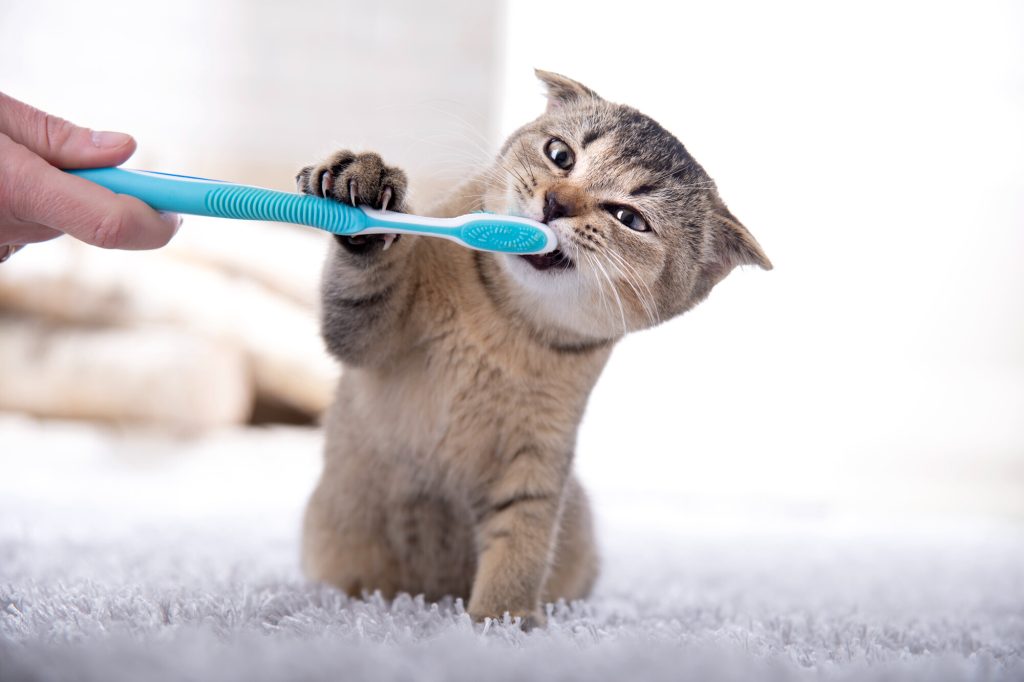
Pet Dental Care in Farmington, NM
Can you imagine what your teeth would look like if you never brushed them? It’s no different for cats and dogs, and many pet owners don’t realize that bad breath and dirty teeth can be early signs of gum disease that spreads to the kidneys, heart, and liver.
Book OnlineYour pet’s gums act as a boundary to the bloodstream, so without regular dental care, you may be neglecting an important factor in their overall health and putting them at higher risk for serious illness. In fact, 85% of dogs and 70% of cats over the age of three suffer from some form of dental disease, so chances are your pet could benefit from a dental exam.
Even if your pet’s teeth don’t look stained, bacteria can still be present below the gum line, which is why a professional oral exam matters. If your pet has bad breath, that’s already a sign of dental disease at work. Left untreated, plaque builds up on the teeth and hardens into tartar, spreading further and leading to gum disease, tooth loss, and real pain for your pet.
Your pet feels the pain of a toothache just like you would, but they can’t tell you when something hurts. You wouldn’t go weeks or months ignoring your own toothache, and your pet shouldn’t have to either. Without routine dental care, pets can quietly experience ongoing pain in their gums and jaw.
The best thing you can do to prevent dental disease is to schedule a dental exam for your pet. At-home care like brushing and dental chews plays a role, but our veterinarians provide the professional cleanings and evaluations, including pre-anesthetic bloodwork and dental radiographs when needed, that are essential to your pet’s long-term dental health.
Annual dental exams are a necessary part of your pet’s overall wellness routine. Call us at (505) 326-2205 or stop by in person to talk about your pet’s dental health today.
Frequently Asked Questions
How do I know if my pet needs a dental cleaning?
Bad breath, visible tartar, red or swollen gums, and reluctance to chew are all signs your pet may need a dental cleaning and exam.
How often should pets have a professional dental cleaning?
Most pets benefit from an annual dental exam and cleaning, though some pets with more significant dental disease may need cleanings more often.
Is anesthesia necessary for pet dental cleanings?
Yes, anesthesia allows us to thoroughly clean below the gum line and take dental X-rays safely and comfortably, without causing your pet stress or pain.
Can dental disease really affect my pet’s other organs?
Yes, bacteria from untreated gum disease can enter the bloodstream and affect the heart, kidneys, and liver, making dental care an important part of your pet’s overall health.
What can I do at home to help my pet’s dental health?
Regular brushing, dental chews, and dental-formula diets can all help slow plaque and tartar buildup between professional cleanings.
At what age should pets start getting dental checkups?
Dental health should be checked at every wellness exam starting from puppyhood or kittenhood, so problems can be caught and addressed early.
What happens if my pet’s dental disease goes untreated?
Untreated dental disease can progress to painful tooth loss, infection, and increased risk of disease affecting the heart, kidneys, and liver.